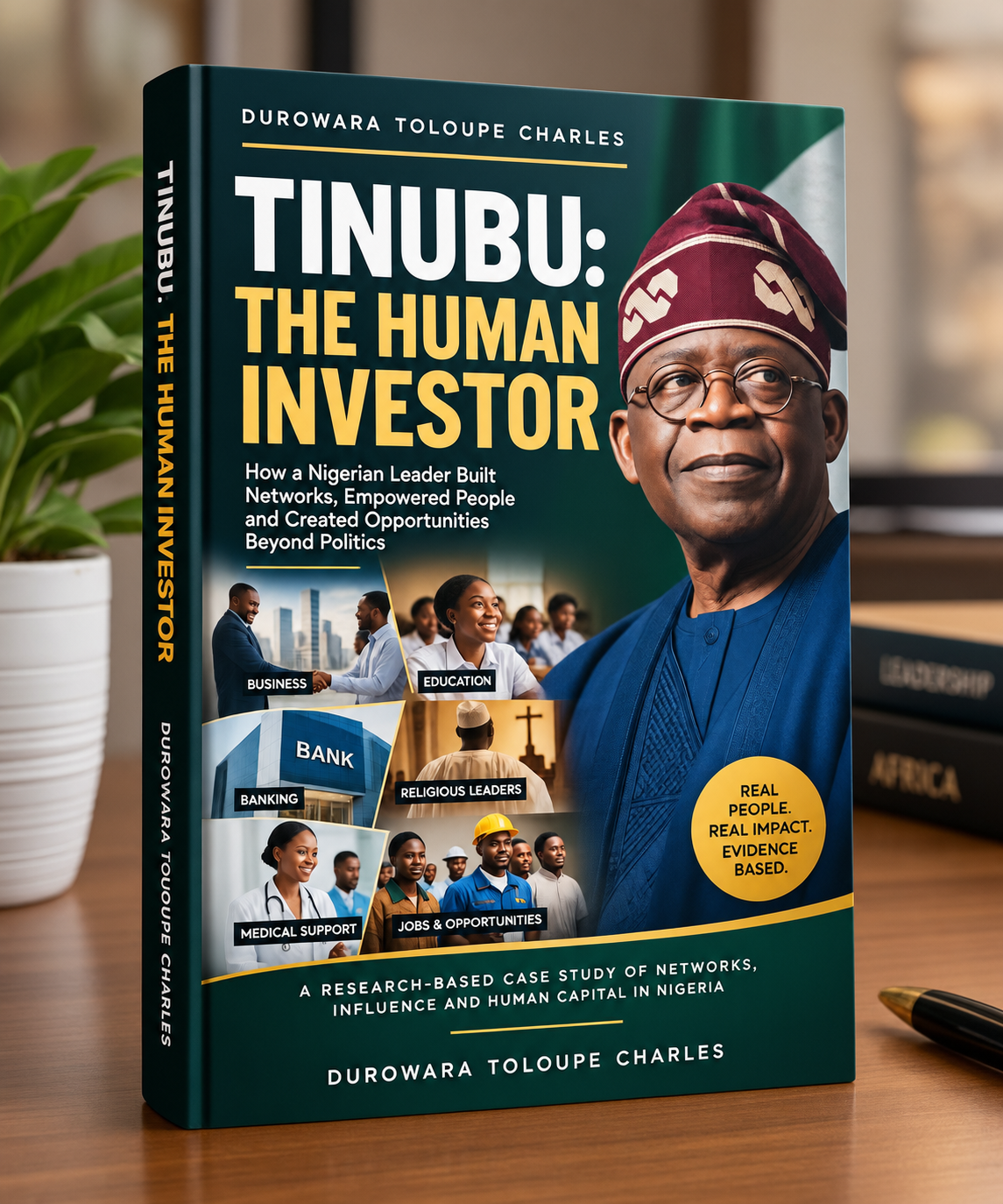
Before the Presidency
Bola Ahmed Tinubu's national political story did not begin with the presidency. Before entering elected politics, he worked in the private sector, including Arthur Andersen, Deloitte, Haskins, Sells & Co. and Mobil Oil Nigeria. He later served as a senator during the short-lived Third Republic before becoming Governor of Lagos State in 1999.
Princeton's Innovations for Successful Societies records that Tinubu served as Lagos governor from 1999 to 2007 and describes the administrations of Tinubu and his successor Babatunde Fashola as pursuing reforms in revenue, public administration, security, sanitation, traffic, infrastructure and investment.
That period matters to this book because it gives us a defined laboratory. Rather than attempting to explain every aspect of Tinubu's life, we can ask a narrower historical question: what did his administration do with people, professional expertise and institutions?
The Lagos laboratory
Lagos entered the new democratic period with severe governance problems. Princeton's case study describes a state facing crime, congestion, blight and weak government capacity.
Tinubu's administration responded with a mixture of organisational reform, revenue reform, public-service changes and infrastructure initiatives. Tinubu himself told Princeton that he tried to transfer principles learned in the corporate sector into government.
This does not prove that every reform worked exactly as intended. It does establish that institutional reform was a stated and documented part of the administration's approach.
The first distinction
The first distinction in this book is between personal investment and institutional investment.
If a governor personally gives a person money, that is one type of intervention. If a governor appoints a qualified professional to a demanding office, that is another. If a government creates a system that trains thousands of employees, that is another. If a state creates a programme for students, that is another.
All can be studied under the broader idea of human capital, but they should never be mixed together as if they were the same thing.
Princeton Innovations for Successful Societies, Remaking a Neglected Megacity: A Civic Transformation in Lagos State, 1999–2012; and Princeton's interview with Bola Tinubu on civil-service and public-sector reform. Readers are encouraged to consult original sources and form their own conclusions.